Fully Custom Homes Require Fully Custom Timelines
One of the most important—and sometimes misunderstood—aspects of building a fully custom home is the timeline.
At first glance, it may seem reasonable to expect a luxury home to come together quickly, especially when homeowners are excited to move into a space they have dreamed about for years. However, a fully custom home construction timeline operates very differently from the schedule of a production or semi-custom home.
Every custom home involves its own architecture, selections, homesite conditions, materials, craftsmanship, and construction requirements. Because no two projects are exactly alike, there is no one-size-fits-all timeline for building a truly custom home.
At Frazier Homes, we believe setting realistic expectations around the custom home building timeline is one of the most important parts of creating a successful building experience.

A Fully Custom Home Is Not a Pre-Packaged Product
Unlike production homes built from repeated floor plans and pre-selected finishes, a fully custom home is designed specifically around the homeowner's lifestyle, preferences, property, and vision.
That means nearly every aspect of the home can require:
Individual design decisions
Architectural planning
Engineering coordination
Material selections
Vendor lead times
Trade scheduling
Custom fabrication
Site-specific problem-solving
From the architecture and floor plan to cabinetry, millwork, lighting, flooring, plumbing fixtures, and finishes, each decision becomes part of a much larger construction process.
The reality is that true customization naturally requires more time, coordination, and precision.

Luxury Custom Home Construction Is Highly Coordinated
One of the biggest misconceptions about the custom home building process is that construction simply happens one task at a time in a straight line.
In reality, luxury custom home construction involves dozens of skilled trades, suppliers, consultants, inspectors, designers, engineers, and manufacturers working in carefully coordinated sequences—and often simultaneously.
Something as seemingly simple as:
A lighting revision
Appliance change
Tile selection delay
Cabinet modification
Plumbing adjustment
Can affect multiple activities later in the construction schedule.
For example, an appliance change may affect cabinetry dimensions, electrical requirements, plumbing locations, ventilation, and installation scheduling.
This does not necessarily mean something has gone wrong. It is often simply the reality of coordinating the many interconnected details involved in building a one-of-a-kind custom home.

Custom Home Selections Directly Impact the Construction Timeline
One of the largest factors affecting a custom home construction schedule is the selections process.
Fully custom luxury homes can involve:
Hundreds of finish decisions
Long-lead specialty materials
Custom cabinetry and millwork
Imported products
Approval revisions
Shop drawings
Custom fabrication
Coordination meetings
Many selections also need to be finalized well before they are physically installed in the home.
When selections are delayed, revised repeatedly, or left unresolved, other parts of the construction timeline may also be affected.
This is why custom home builders place significant emphasis on selection deadlines, approvals, and decision schedules throughout the building process. Making thoughtful decisions at the appropriate time helps keep procurement, fabrication, and construction moving forward.

Maintaining a Custom Home Timeline Requires Partnership
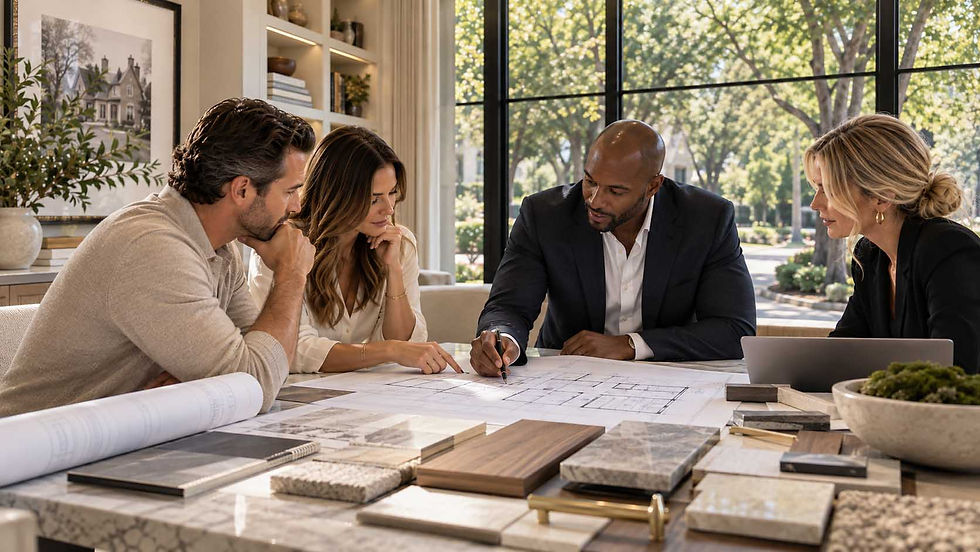
One of the most important things homeowners can understand is that maintaining a custom home building schedule is a shared responsibility.
The builder manages:
Construction scheduling
Project coordination
Trade sequencing
Construction execution
Procurement management
Quality oversight
Homeowners also play an important role through:
Timely decisions
Selection approvals
Responsive communication
Budget alignment
Understanding material lead times
A change that feels relatively small during the design or construction process can sometimes affect several other decisions that have already been made.
Clear communication and timely decision-making help everyone involved anticipate those effects and determine the best path forward.
The strongest custom home projects are almost always collaborative projects.

Custom Homes Are About Precision, Not Speed
Luxury custom homes are not assembly-line products.
Many of the features homeowners value most require time, skill, and craftsmanship, including:
Custom cabinetry
Detailed trim and millwork
Specialty tile installation
Luxury lighting integration
Site-built architectural elements
Natural stone
High-end finishes
Custom architectural details
The goal is not simply to finish quickly.
The goal is to finish well.
Rushing highly customized work can ultimately create greater frustration through:
Rework
Defects
Quality concerns
Design misalignment
Compromised craftsmanship
A well-executed custom home requires skilled tradespeople to have the appropriate time to complete their work to the level expected in a luxury residence.

Material Lead Times Can Affect Custom Home Schedules
Another important part of understanding how long it takes to build a custom home is recognizing that not every element of the schedule is controlled by what happens on the homesite.
Luxury homes frequently incorporate specialty or made-to-order products such as:
Custom windows and doors
Cabinetry
Specialty appliances
Decorative lighting
Plumbing fixtures
Natural stone
Custom millwork
Specialty hardware
These products may have manufacturing, shipping, fabrication, or delivery timelines that must be incorporated into the overall construction schedule.
Planning selections early and understanding lead times helps reduce avoidable delays, but some variability is simply part of building with highly customized materials and products.

Weather and Homesite Conditions Can Influence the Timeline
Every custom home is also built on a unique property.
Weather, soil conditions, grading, utility coordination, inspections, site access, and other property-specific factors can influence different phases of construction.
Unlike a controlled manufacturing environment, custom home construction takes place in real-world conditions.
Experienced planning can anticipate many variables, but flexibility remains an important part of the process—particularly during site work, foundation, framing, and exterior construction.
Not Every Homeowner Is Looking for the Same Building Experience
There is absolutely nothing wrong with wanting a faster, more streamlined construction timeline.
However, homeowners seeking:
Immediate move-in timelines
Limited involvement in selections
Rapid construction cycles
Simplified decision-making
Pre-established floor plans and finishes
May find that a production or semi-custom building experience better aligns with their goals and expectations.
Fully custom home building is typically best suited for homeowners who:
Value personalization
Appreciate craftsmanship
Want architecture designed around their lifestyle
Enjoy participating in the design process
Understand the complexity of custom construction
Are willing to engage thoughtfully throughout the project
Neither approach is inherently better. They simply provide very different building experiences.
Understanding that difference before construction begins can help homeowners choose the process that best fits their priorities.
The Best Custom Homes Usually Take Patience
Some of the most beautiful and successful luxury custom homes are the result of:
Careful planning
Intentional decision-making
Detailed coordination
Skilled craftsmanship
Clear communication
Patience throughout the process
In luxury custom home construction, quality often lives in the details—and details require time.
The time spent refining architecture, coordinating selections, resolving details, and executing craftsmanship contributes directly to how the finished home looks, feels, and functions.

How Long Does It Take to Build a Fully Custom Home?
There is no universal answer to how long it takes to build a custom home.
The timeline can vary based on the size and complexity of the home, architectural design, homesite conditions, permitting, selections, custom fabrication, material availability, weather, homeowner changes, and the level of detail involved.
That is precisely why a fully custom home requires a fully custom timeline.
Rather than comparing the schedule to another home—or to a production building timeline—the more meaningful question is whether the project schedule realistically reflects the architecture, materials, craftsmanship, and level of customization required for that particular home.
Final Thoughts
Building a fully custom home is a highly personal and detailed process that requires coordination, flexibility, communication, and patience from everyone involved.
At Frazier Homes, we believe one of the most important foundations for a successful luxury custom home building experience is establishing realistic expectations about the construction timeline from the very beginning.
When homeowners understand how architecture, selections, material lead times, skilled trades, homesite conditions, and changes can influence the schedule, the timeline becomes easier to understand as part of the larger custom building process.
The most rewarding projects are rarely defined by how quickly they were completed.
They are defined by the craftsmanship, planning, collaboration, and attention to detail that were given the time they deserved.