
Working With a Custom Home Builder: Why Partnership and Alignment Matter
Building a fully custom home involves far more than architectural plans, materials, and construction. Behind every successful project is a network of people making hundreds of decisions, coordinating schedules, solving problems, and working toward the same vision.
One of the greatest advantages of working with an experienced custom home builder is gaining access not only to construction expertise, but also to the builder’s established relationships, trusted trade partners, vendors, coordination systems, and years of experience managing complex projects.
At Frazier Homes, we believe successful custom home building depends on something that can be easy to overlook: alignment
.
When homeowners, builders, designers, vendors, and trade partners understand their roles, responsibilities, and expectations from the beginning, the entire project has a stronger foundation.
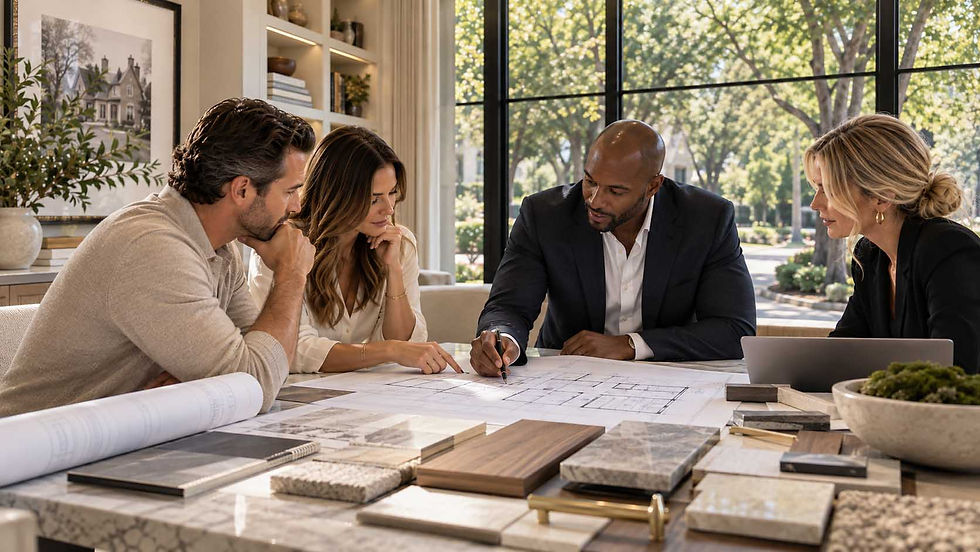
A Custom Home Builder Does Much More Than Build the House
When people think about what a custom home builder does, construction is usually the first thing that comes to mind.
And yes, builders oversee scheduling, manage trades, monitor quality, and ultimately bring the home to life. But much of the work involved in building a custom home happens behind the scenes.
A luxury custom home builder may also be coordinating:
Architects and designers
Trade contractors
Cabinetry and millwork
Appliances
Lighting
Plumbing fixtures
Tile and stone
Specialty materials
Product deliveries
Installation schedules
Inspections
Warranty communication
Every one of these pieces has to fit into a much larger construction schedule.
A delayed appliance can affect cabinetry. A lighting change can affect electrical work. A material arriving too early creates a storage and damage concern. A product arriving too late can delay installation and potentially affect several trades that follow.
That interconnectedness is one of the reasons custom home project management is so important.

Why a Builder’s Vendor and Trade Relationships Matter
Experienced custom home builders spend years developing relationships with reliable trades, suppliers, fabricators, designers, and specialty vendors.
Those relationships aren't simply a list of recommended companies. They are part of the infrastructure behind a well-managed custom home.
Established professional relationships can help provide homeowners with better communication, knowledgeable product guidance, more coordinated scheduling, clearer accountability, and faster problem-solving when something unexpected occurs.
And in custom construction, something unexpected eventually will occur.
The real value of an experienced team isn't that every project will be completely free of challenges. It's having people who know how to identify an issue, communicate about it, and keep the project moving.

What Happens When Homeowners Purchase Materials Independently?
This is an important conversation to have before construction begins.
A homeowner may occasionally want to purchase an appliance, fixture, material, or specialty product independently. There can be perfectly reasonable reasons for doing so.
But purchasing an item separately does not necessarily remove that item from the construction process.
Imagine a homeowner independently purchases a specialty range for the kitchen. The transaction itself may happen outside the builder's vendor network, but incorporating that range into the home could still require coordination with the cabinet company, electrician, plumber, countertop fabricator, delivery team, installer, and construction schedule.
Someone still needs to determine:
When does it arrive? Where does it go? Who receives it? Who verifies it? Who protects it? Who installs it? What happens if it's damaged? What happens if the specifications are wrong? Who handles the warranty?
That's why conversations about owner-supplied materials in custom home construction should happen early.
The issue isn't simply where something was purchased. It's understanding who is responsible for everything that happens afterward.

Coordination Is Part of What You Are Hiring a Custom Builder to Do
One of the most overlooked aspects of building a custom home is the amount of time devoted purely to coordination.
Behind a finished room may be weeks or months of communication involving specifications, lead times, measurements, site readiness, deliveries, trade schedules, installation requirements, inspections, and quality control.
That work isn't always visible when you walk through the finished home.
But it's a major part of what makes the finished home possible.
An experienced builder isn't simply managing individual products or trades. The builder is managing the relationship between all of them.
And that distinction matters.
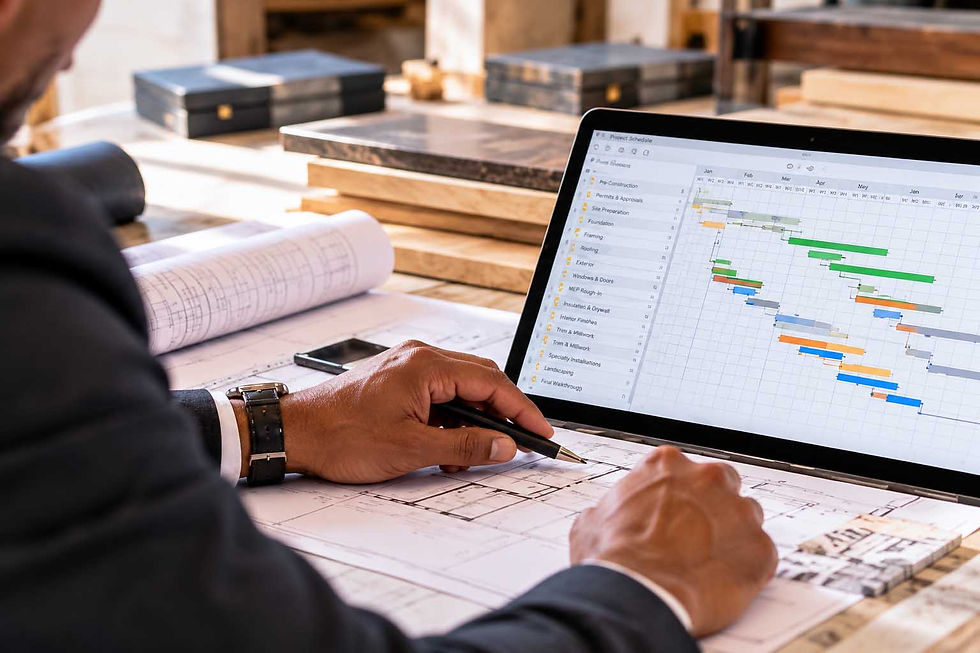
Why Builder, Homeowner, and Vendor Alignment Matters
Problems can arise when the responsibilities within a project change but expectations do not.
For example, a homeowner may decide to purchase certain materials or products outside the builder's established process while still expecting the builder to manage delivery, storage, installation, trade coordination, troubleshooting, and warranty issues in exactly the same way.
Neither approach is inherently wrong.
The important thing is that everyone understands the arrangement before the decision is made.
Questions worth discussing with your builder include:
Can homeowners purchase materials directly?
Who coordinates delivery?
Who is responsible for inspecting products when they arrive?
Who handles damaged or incorrect materials?
Who schedules installation?
Who communicates with the vendor if there is a problem?
How are warranties handled?
Are there additional coordination or installation costs?
Could the purchase affect the construction schedule?
These conversations may not be as exciting as choosing countertops or lighting, but they can prevent a tremendous amount of frustration later.

The Best Custom Home Projects Operate as Partnerships
A fully custom home requires thousands of decisions, and no single person makes all of them.
The strongest projects typically have several things in common: transparent communication, clearly defined responsibilities, realistic expectations, mutual respect, and a shared understanding of how decisions affect the larger project.
That doesn't mean homeowners give up control.
Quite the opposite.
A good custom home building process should give homeowners the information and guidance they need to make informed decisions while allowing the builder to effectively coordinate the people and processes required to execute those decisions.
The goal isn't control.
The goal is clarity.
The Value of a Custom Builder Goes Beyond Materials and Labor
When comparing custom home builders, it's tempting to focus primarily on visible things: architecture, finishes, craftsmanship, materials, and the completed homes in a portfolio.
Those things absolutely matter.
But homeowners should also consider what happens behind the finished product.
How does the builder manage communication? How are vendors selected? How are trades coordinated? What happens when something goes wrong? Who takes responsibility for solving problems? How organized is the construction process?
An established custom builder has spent years developing systems, relationships, standards, and institutional knowledge that can't be captured by the price of an individual product.
That expertise is part of what you're hiring.

Questions to Ask a Custom Home Builder Before You Build
If you're considering building a custom home, understanding how your builder manages vendors and outside purchases before signing a contract can prevent confusion later.
Ask prospective builders how they handle vendor relationships, owner-purchased products, installation responsibilities, warranties, deliveries, scheduling, and coordination.
More importantly, ask why their process works the way it does.
A strong builder should be able to clearly explain both the process and the reasoning behind it.
Those conversations can tell you a great deal about what working together will actually be like.

Building a Custom Home Requires a Team Working Toward the Same Goal
A fully custom home is ultimately the product of hundreds of people, decisions, conversations, and details coming together.
At Frazier Homes, we believe the best results happen when homeowners, builders, architects, designers, vendors, and trade partners work with clearly defined expectations and mutual respect for the expertise each person brings to the project.
Successful coordination doesn't happen by accident.
It comes from experience, communication, trusted relationships, thoughtful systems, and a team aligned around one goal: building an exceptional home.

Thinking About Building a Custom Home?
Frazier Homes builds fully custom luxury homes throughout Cincinnati and Northern Kentucky, with an architecture-first approach and a guided process from initial planning through completion.
Explore our custom home building process and Learn the Difference.


